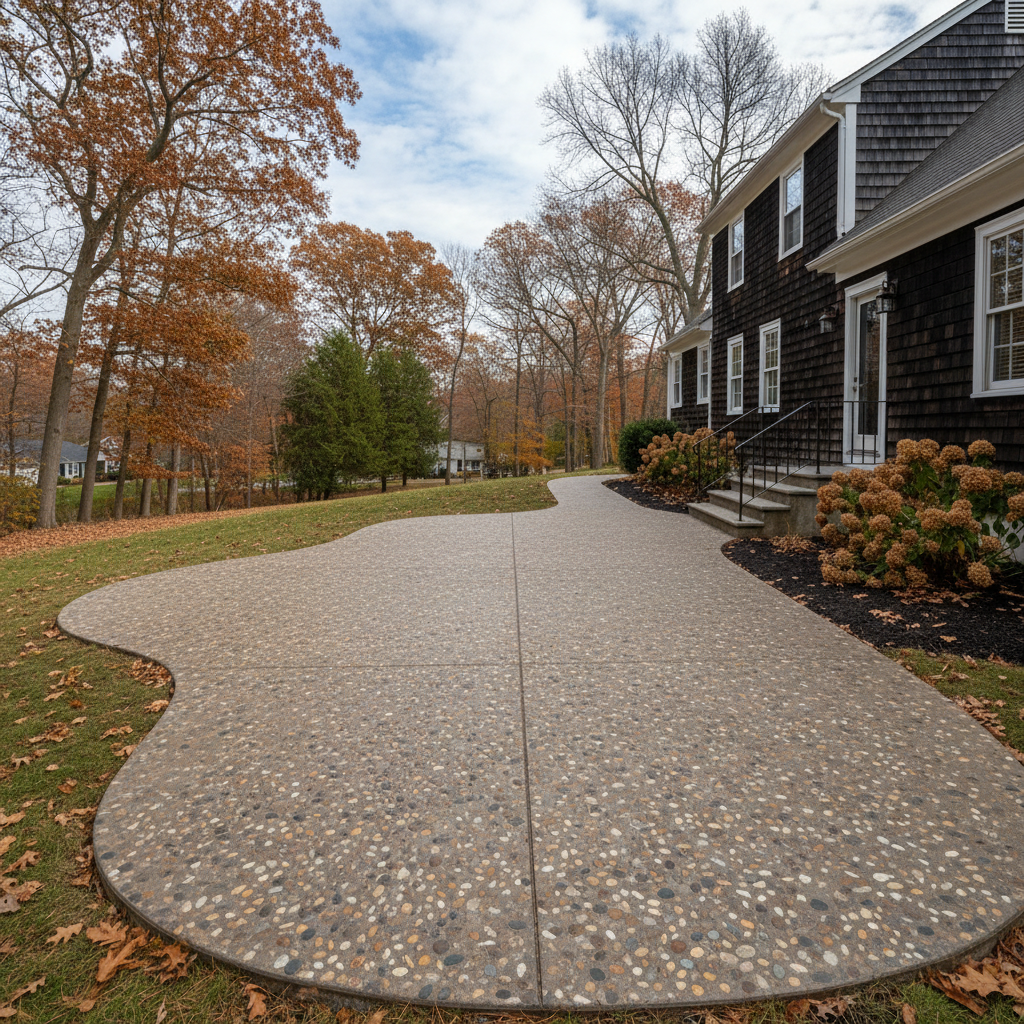
New England weather damages concrete. If you live around Knightsville or up near Oaklawn, you already know what a Cranston winter does to a driveway. Between the heavy damp snow, the freezing nights, and the city salt trucks, your flatwork takes damage year after year. I am Mike, and over at TH Concrete Co., our team spends a lot of time fixing cracked slabs that could have easily lasted another decade with just a little seasonal foresight.
Timing a new pour around our local climate is not just about picking a sunny day in July. Pouring concrete when it is ninety degrees and blazing sun brings its own set of headaches, mostly because the water evaporates too fast and leaves you with a weak, brittle surface. On the flip side, trying to lay a patio in November while the ground is dropping below freezing at night is a recipe for total disaster. Water inside the mix expands when it turns to ice, ruining the chemical reaction that gives concrete its strength.
The Ideal Windows for Scheduling a Pour
Late spring and early autumn are prime time for concrete work around here. The ground has finally thawed out from those brutal January nor'easters, and the daytime temperatures are not scorching enough to bake the moisture right out of fresh mud. If you are planning a new driveway or a backyard patio, aim for May or September. You get steady curing conditions without the extreme thermal shock that cracks green concrete.
Summer pours can work just fine, but they take extra discipline. TH Concrete Co. uses specific admixtures and keeps a close eye on the hydration process so the top does not crust over while the bottom is still soup. Do not let anyone tell you summer is off-limits; you just need a crew that knows how local humidity and wind speed affect set times.
Protecting Your Investment Through the Seasons
Once your concrete is cured, the real maintenance starts. Winter maintenance is where most homeowners drop the ball. Stop using rock salt or cheap chemical ice melters on fresh concrete, because those products break down the surface paste and pit the aggregate right out. Grab some plain sand for traction instead, or use calcium chloride if you must melt ice.
- Seal your exterior flatwork every two to three years to block out moisture.
- Keep expansion joints clear of dirt so the slabs can shift naturally.
- Wash off winter salt accumulation as soon as the spring thaw hits.
Water is the enemy of concrete, especially given the clay-heavy soil conditions we deal with across many Cranston neighborhoods. When water gets trapped underneath a slab and freezes, it heaves the concrete upward. Make sure your downspouts discharge well away from your walkways and patio edges. A little grading adjustment or a quick run with a tube of polyurethane caulk in the control joints saves you thousands in replacement costs down the road.
Taking care of concrete does not have to be a massive chore. Pay attention to drainage, keep the harsh chemicals off your driveway when the snow flies, and schedule your big projects during the shoulder seasons. Do those few simple things, and your flatwork will stay flat, solid, and looking sharp for decades.