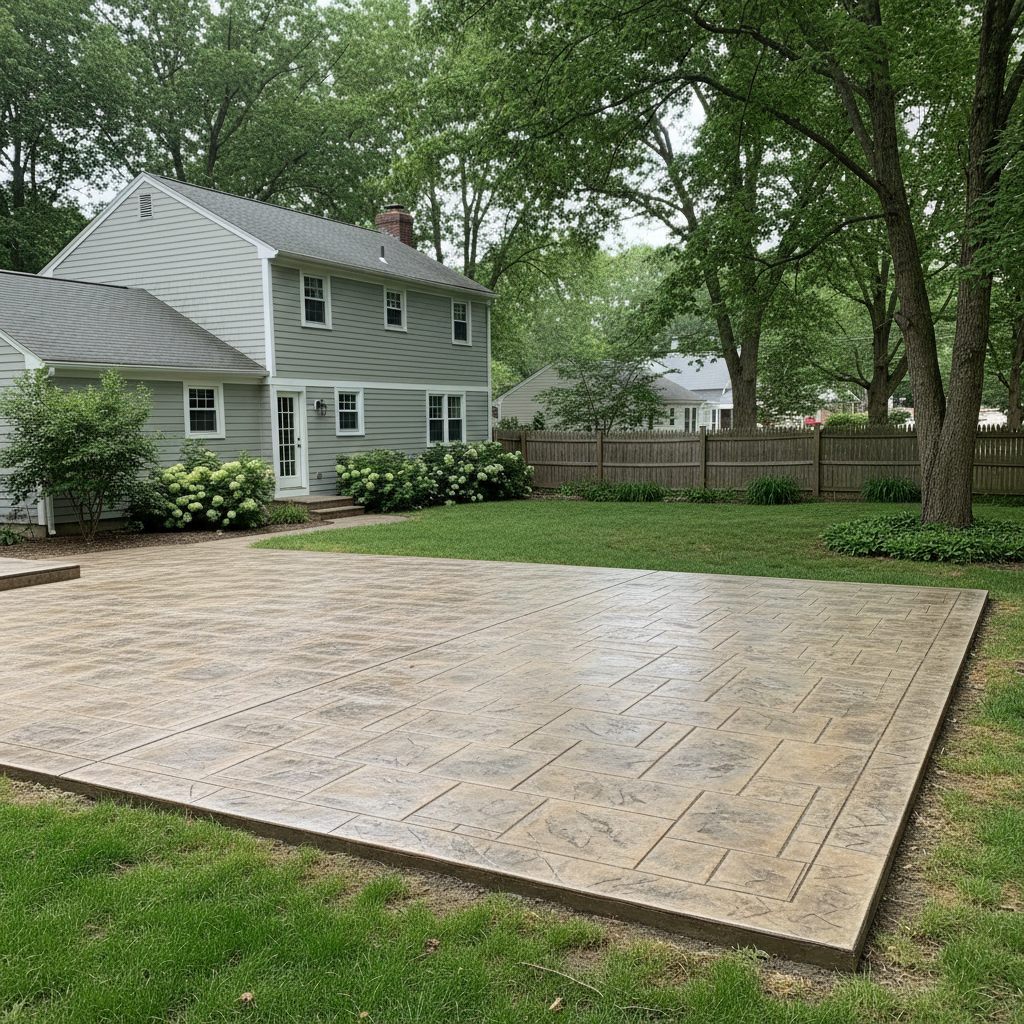
You've got a concrete patio, and you want it to last. That's smart. Around here in Cranston, especially with our winters, a little preventative care goes a long way. I've seen too many good patios go bad because folks didn't know the simple steps to keep them healthy. Let's talk about what you can do.
Extend Your Patio's Life: It's All About Protection
The biggest thing you can do for your concrete patio is protect it from the elements. We get freezing and thawing cycles that are brutal on concrete, not to mention the salt and chemicals people use to melt ice. Here's what I recommend:
- Seal it Up: If your patio isn't sealed, or if it's been a few years since its last sealing, get it done. A good quality penetrating sealer is like sunscreen for your concrete. It repels water, oil, and other stains, and it helps prevent those freeze-thaw cycles from doing their damage. You're usually looking at resealing every 2-3 years, but it really depends on the sealer type and how much traffic your patio gets.
- Avoid De-icing Salts: This is a big one. Regular rock salt (sodium chloride) is terrible for concrete. It can cause spalling, which is when the surface flakes off. Use sand for traction or a concrete-safe de-icer if you absolutely need one. Calcium chloride is generally better than sodium chloride, but even those should be used sparingly, right?
- Clean Spills Immediately: Oil, grease, rust, even spilled drinks – they can all stain concrete if you leave them too long. The quicker you clean them up, the better your chances of preventing a permanent mark.
Regular Maintenance: Simple Steps, Big Impact
Keeping your patio clean isn't just about looks; it's about preventing long-term issues. Dirt and grime can hold moisture against the surface, which isn't good, especially when it freezes.
- Sweep and Rinse Regularly: A good sweeping once a week or so, followed by a rinse with a garden hose, will remove loose dirt, leaves, and debris. This stops organic matter from breaking down and staining the concrete.
- Deep Clean Annually: Once a year, usually in the spring, give your patio a good scrub. You can use a mild detergent and a stiff brush, or a pressure washer on a low setting (be careful not to use too high a pressure, as it can damage the surface or sealer). Make sure to rinse thoroughly afterwards.
- Watch for Weeds: Weeds pushing up through cracks can make small problems much bigger. Pull them out as soon as you see them.
Warning Signs: What to Look Out For
Your patio will usually tell you when something's wrong. You just need to know how to listen.
- Cracks: Small hairline cracks are often normal, especially with our soil types around here, like the heavy clay you find in parts of Garden City. But if you see cracks that are widening, or if they're raising one section of concrete higher than another, that's a problem.
- Spalling or Flaking: This is when the top layer of concrete starts to peel or flake off. Freeze-thaw cycles or improper de-icer use often cause it. It's not just cosmetic; it weakens the concrete.
- Pitting: Small holes or craters on the surface can be a sign of aggregate exposure or surface deterioration.
- Discoloration or Stains: If your patio is suddenly looking patchy, or if stains aren't coming out with regular cleaning, it might be time for a deep clean and reseal, or even a resurface.
- Settling or Unevenness: If one part of your patio is sinking or becoming noticeably uneven, it could indicate issues with the base or soil underneath. This is a structural problem.
When to Call a Professional (Like TH Concrete Co.)
Look, you can handle a lot of basic maintenance yourself. But there are times when you need an expert. Don't wait until a small issue becomes a major repair.
- Major Cracks or Uneven Slabs: If your cracks are more than a quarter-inch wide, or if slabs are significantly unlevel, you need professional assessment. We can look at things like mudjacking or more extensive repair options.
- Widespread Spalling or Pitting: If a large area of your patio is flaking or pitting, it's beyond a simple patch job. We can often resurface or overlay the concrete to give it a new life.
- Drainage Issues: If water is pooling on your patio, or running towards your house foundation, that's a serious concern. We can assess the grading and suggest solutions to prevent water damage.
- You're Unsure: Honestly, if you're looking at something and you're not sure if it's a big deal or not, just give us a call. It's better to get an opinion early than to ignore it and end up with a much more expensive problem down the road. We're happy to take a look and give you an honest assessment.
Taking care of your concrete patio isn't rocket science, but it does require a little attention. Do these things, and you'll enjoy your outdoor space for many years to come.